Thanksgiving (Feast of Booths, that is, the Feast of Tabernacles: The Ordinances of the Feast) (Exod 23:14-17)
Thanksgiving
(Feast of Booths, that is, the Feast of Tabernacles:
The Ordinances of the Feast)
Exod 23:14-17
Exodus 23:14-17 “Three times a year you shall celebrate a feast to Me. You shall ob- serve the Feast of Unleavened Bread; for seven days you are to eat unleavened bread, as I commanded you, at the appointed time in the month Abib, for in it you came out of Egypt. And none shall appear before Me empty-handed. Also you shall observe the Feast of the Harvest of the first fruits of your labors from what you sow in the field; also the Feast of the Ingathering at the end of the year when you gather in the fruit of your labors from the field. Three times a year all your males shall appear before the Lord God.
When thanksgiving does not cease in our daily lives, troubles, pain, and the forces of evil cannot invade our homes. The power of thanksgiving is greater than we can imagine. The Feast of Weeks (Pentecost) is the day of the coming of the Holy Spirit. Through the coming of the Holy Spirit, the church was born. In other words, the mother of the church is the Holy Spirit. Right before the Lord ascended to heaven, He said, “Do not leave Jerusalem, but wait for what the Father has promised”—that is, to pray until they received the Holy Spirit. As they prayed for ten days, an earthquake came to the earth, and a strong wind blew, and the Holy Spirit came upon the 120 disciples. Regardless of their own will, they all received the Holy Spirit. Those who received the Holy Spirit were those who had once lied and fled when Jesus was crucified, afraid of a brutal death if they claimed to be His disciples. But after receiving the Holy Spirit, they became like iron men, boldly and powerfully testifying to the name of Jesus, even to the point of death. Seeing their transformation shows the great authority and power of the Holy Spirit, as well as their thanksgiving.
Why did God establish the feasts for the people of Israel?
Why did God establish the feasts for the people of Israel? It would have been easier if He had just said, “Just believe in Me,” “Just love Me,” or “Just believe and obey My word.” Then why did He appoint the feasts? There are three reasons: because we must know, understand, and believe that He established them. In other words, there must be action that follows in doing as He commanded. This is God’s consistent desire throughout the Bible. The entire Scripture is God’s word of law for how we are to live, serving God every day, loving and believing Him throughout our lives, and obeying and keeping His word. God established for the people of Israel three national feasts.
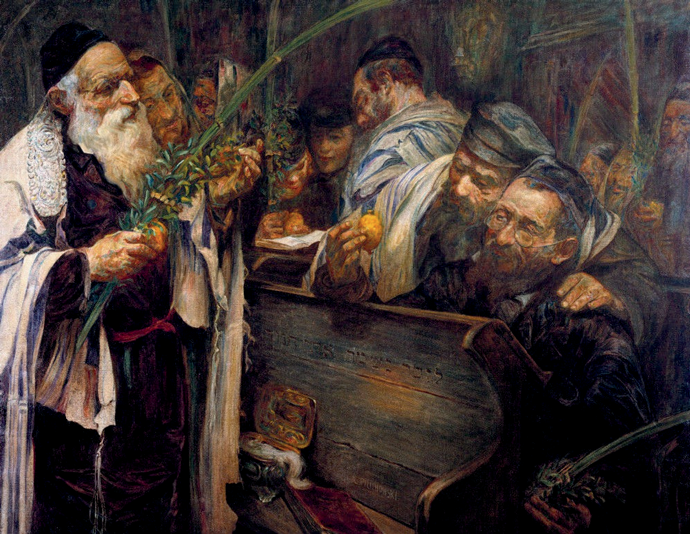
Among them, the “Feast of Booths” was a feast where not even one family member could be left out, and even guests staying in the house had to go out and live in booths for one week. At that time, they did not have tents, so they built small shelters with leaves or rice straw and kept the Feast of Booths for seven days. If we love God, we do not complain or grumble. In fearing God, we should not say, “Isn’t one day enough? Why do we have to keep it for a whole week?” We must not complain like that. Each day has its own meaning and purpose. It means that, just as you erase something little by little with an eraser, each day removes something from your heart and draws you closer to God. It carries the meaning of “I have drawn near to God, I have received God’s answer.”
The “Passover” is about giving thanks for the grace that saved the people of Israel from Egypt. For 430 years, the Israelites lived as slaves. Imagine working as a servant in someone else’s house for just ten years. If you started at twenty, you would be thirty by the time you finished; if you started at thirty, you would be forty. Even the word “servant” sounds miserable. But they were slaves not for ten years, but for 430 years. What rights could a slave have when nothing belonged to him? If ordered not to eat, he could not eat; if ordered to eat, he had to eat. God repeatedly said through Moses, “Do not forget that you were slaves in Egypt!”
The Hebrew month of “Abib” is “the first month.” According to the general solar calendar, it is around March to April. Passover ends on the 14th, and after that comes the Feast of Unleavened Bread. The bread is made without yeast, which symbolizes sin, and how sin spreads. So God commanded them to make bread without yeast, in its original state. The reason He taught this was to give people a good heart like the original creation and to help them understand that restoration to the original state should happen this way. Just as bread with yeast rises, when sin enters a person, their pride rises and they become self-centered, forget God, and are corrupted. On the other hand, when dough is made without yeast, it does not change, and remains as it is. This hands-on teaching was meant to help them realize that the original creation was like this.
Unleavened bread means that we must not commit sin and that we must remain pure.
During the Feast of Unleavened Bread, unleavened bread emphasizes that we must not sin and must stay pure. Eating bitter herbs reminds us of how much our ancestors suffered and teaches us to never forget that if we sin, we become slaves to sin. For Passover, a lamb must be taken according to the number of people in the household. If there are five people, five lambs are needed. No matter how expensive a lamb may be, what matters is that through it, people are freed from sin. Sin cannot be removed even with billions of dollars. (Exod 12:3–6)
The lamb is kept for four days. These four days represent the four cardinal directions: east, west, south, and north. This signifies that in all directions there is no shame, and that everything has meaning. (Matt 26:28, 20:28; Isa 53:11–12; Heb 2:10, 9:28; Rom 5:15, 3:22, 24, 4:25; 1 Pet 1:18–19)
For a week, they kept the Feast of Unleavened Bread, eating unleavened bread and bitter herbs. When the Israelites were slaves in Egypt, they could hardly eat or wear proper clothing, and even though they toiled by the sweat of their brow, they were treated with nothing but insults and beatings. It was so painful and miserable that all the people cried out, and God heard their cries and came down (Exod 1:2). Hearing the cries of their suffering, He called Moses, who had been hiding in the wilderness of Midian for forty years. God called him from the burning bush and gave him his mission.
Therefore, Passover means “complete liberation from the world of slavery.” As Romans 6 says, “You are slaves of the one whom you obey.” Even though we have not sinned like Adam, we are descendants of Adam, born of his blood, his flesh, therefore inheriting the same sin as Adam (Rom 5:12). So we are slaves to sin, servants to sin. The reason for Passover is to make humans realize that through Adam, we became enslaved to sin. Passover symbolizes complete liberation from sin and the exodus from Egypt, which is the symbol of sin. How much suffering did they endure in Egypt? The bitter herbs were so bitter that they could not swallow them and had to spit them out. Eating the bitter herbs was to make them realize how their ancestors suffered, were beaten, and lived in poverty as a result of sin. Therefore, Passover shows that we are completely released and set free from sin and that the law of the Spirit has completely freed us (1 Cor 5:7).
Through Passover, the birthright was restored.
During Passover, a one-year-old lamb was sacrificed to atone for 430 years of sin. When a lamb was purchased and presented to the priest, the priest would examine it from head to toe, and if there was any defect, it was rejected. A lamb without defects was then kept for four more days to be monitored for internal diseases, diarrhea, or any other signs of illness. It had to have no issues to be accepted. In the evening, the lamb was slaughtered; its blood was collected, and the internal organs and fat were burned. When eating the Passover lamb, it had to be eaten indoors; no one could go outside the house. All the blood was carefully collected and dipped with hyssop, then applied to the doorposts of each house.
After that, the heavenly angel came down. In the houses with blood on the doorposts, the angel passed over, but in the houses without blood, from the king’s firstborn to the prisoner in jail, all the firstborn and first animals were killed. Because of this, on the 14th day of the first month, every house was in mourning, and wailing was heard throughout all of Egypt. God then told the Israelites, “You are My firstborn, My eldest son,” and at that moment, Israel regained the birthright.
Adam was God’s firstborn. How bitterly God must have grieved when His firstborn was stolen by sin. The death of the firstborn in Egypt shows that only Israel is God’s firstborn, and that their stolen birthright was restored. In the end, they reclaimed their birthright and left Egypt.
God had already told Abraham hundreds of years earlier that his descendants would be strangers in a foreign land and serve as slaves for 400 years, but that when they left, they would come out with great wealth. This is like saying that when a servant leaves someone else’s house, they will leave with valuable possessions, which is truly hard to believe. Yet amazingly, the Israelites left with wealth, and everyone carried the same amount (Ps 105:37). The words of the prophecy were fulfilled. By God’s grace, He gave the Israelites everything they asked for (Exod 12:35–36).
The feasts are hands-on teaching
When Jesus came to this earth, He came as the “Passover Lamb.” John the Baptist said in John 1:29, “Behold, the Lamb of God who takes away the sin of the world.” Jesus is also the “scapegoat” (azazel). This is like when the priest lays hands on the scapegoat and transfers the sins of the people onto it. The moment the priest places his hands on the scapegoat, all the sins are placed on the goat, then it is beaten and driven away. A small and weak goat, unable to defend itself, was devoured by wild beasts. In the visible world, the scapegoat dies, but it symbolizes the sacrificial offering that takes away all our sins.
Therefore, Jesus is the scapegoat and the Lamb of God who takes away the sins of the world (Heb 13). Forty-three years ago, while studying the Bible with our congregation seven hours every day, I shed many tears as I realized the heart of Jesus, who took our sins upon Himself as our scapegoat (1 Cor 5:7). Hebrews 13 says that He suffered outside the city while carrying the cross, which refers to Golgotha (Heb 13:12–13).
This was not something made up by humans, but a prophecy from thousands of years ago that has been perfectly fulfilled. Jesus is the Passover Lamb, and because the blood of Jesus is applied to us, death may come to take us but will flee in fear. Please believe that the authority of God’s Word, which swallows up death, is with us (John 8:51).
The Passover Lamb, Jesus, became the sacrificial offering for our sins (1 Cor 5:7). No matter how strong our faith is, could we sacrifice our own child? What if that child was disabled or ill and hard to care for? Do you think you could do it? Even then, none of us could ever actually go through with it.
When Jesus was crucified, His whole body was beaten, a crown of thorns was forced on His head, and in the heat of early summer, He was nailed naked through both hands and feet. As His blood poured out, His throat was parched. During the Korean War, when people were shot and bleeding profusely, they would ask for water out of thirst. If you gave them water, they would die instantly. Blood poured out of Jesus, His body was twisted and stretched. The suffering was unimaginable. With the heavy nails holding Him, His body sagged in its weight. How unbearable must it have been for God to see His own Son like that! The whole earth was dark for three hours.
God sent His only Son to this earth, denying Him a life of comfort. Everywhere He went, people insulted Him and treated Him as a heretic. He was so hungry that in Bethany He looked at a fig tree hoping for fruit, but when there was none, He said, “May you never bear fruit again,” and the tree immediately withered. This was a hands-on teaching moment for humans, showing that if we do not bear the fruit God desires, even our right to live can be taken away.
Our Passover Lamb, our scapegoat, Jesus Christ, has freed us from being slaves to sin and made us truly free. How can we not be thankful? We should even be thankful for children who fail a big exam. By studying and learning from failure, they can succeed next time. How grateful we are to have such sons and daughters!
Thanksgiving is entering into the storehouse of heaven.
Thanksgiving is not giving an offering to God, it is about entering into the storehouse of heaven. With that faith, whether your business does well or poorly, you must give with all your heart. Do not complain because people do not notice; it is enough that God sees.
Thanksgiving symbolizes the eternal rest of heaven. The “Feast of Ingathering,” which means storing the year’s harvest in the granary, and the “Feast of Booths,” which the Israelites kept by going into the wilderness and living in booths for a week, have the same meaning (Exod 23:16; 34:24; Lev 23:34)
The New Testament meaning is “Thanksgiving.” Therefore, in the “Feast of Ingathering,” the harvest represents believers—the fruit of faith in Jesus— entering the storehouse of heaven. This was shown to us as a symbol to teach us. The three feasts that God desires are: Passover, which signifies the atonement of the cross; Pentecost, which announces the coming of the Holy Spirit and the birth of the church; and the Feast of Booths, also called the Feast of Weeks or Firstfruits, which carries the redemptive-historical meaning of eternal rest in heaven.
“Appear before your God” means to worship God and to have a mo- ment of seeking Him.
Specifically, regarding keeping the feasts, the expression God gave, “Appear before your God” (Deut 16:16; Exod 23:17), is spiritually God’s command to worship Him. Worshiping God means having a moment of seeking Him. This must be done not just anywhere, but in the place God has chosen to set His name, the place He designated, which is the church. God commanded that the Passover lamb not be offered in every town, but that it should be roasted and eaten, and joyfully celebrated before the Lord, “in the place where the Lord chooses to establish His name” (Deut 16:2). Therefore, when coming to church, we should rejoice, be glad, and be full of thanksgiving.
Deuteronomy 16:11 and you shall rejoice before the Lord your God… in the place where the Lord your God chooses to estab- lish His name.
Deuteronomy 16:15 Seven days you shall celebrate a feast to the Lord your God in the place which the Lord chooses… so that you will be altogether joyful.
When God created humans, He created them with eternity in mind. Because God is eternal and created us, He gave humans a longing for the eternal world. Jesus said, “You will not die, like my body, but will be transformed,” and through the resurrection, He became a transformed body. Looking at the Bible, Elijah and Enoch were taken up, and it only says that they were taken up; it does not say that they came down. Therefore, the command to long for eternity is because we were originally created to live forever.
Ecclesiastes 3:11 He has made everything appropriate in its time. He has also set eter- nity in their heart, yet so that man will not find out the work which God has done from the beginning even to the end.
God is eternal, and we are not makeshift creations; we are created to live eternally with Him. After Passover, the Israelites kept the Feast of Unleavened Bread for seven days. Then, after seven weeks (49 days), the fiftieth day is Pentecost, which is also called the Feast of Harvest because it is the time to harvest barley. It is also called the Feast of Firstfruits because it is the first of the harvest. (Exod 34:22, 23:16; Lev 23:3–14). Therefore, fifty days after Jesus’ death, ten days after His ascension into heaven, the Holy Spirit came down and the church was born (Acts 2:11, 13–23). This was not a coincidence, but the fulfillment of God’s prophecy.
The Passover, the Feast of Har- vest, and the Feast of Tabernacles are the three essential feasts.
Passover is the day humanity is set free from the sin of Adam, the ancestor of all people—a day of liberation. There’s no need to worry about any sins you’ve committed in the past, because Jesus has already taken them all upon Himself. The moment you believe in the blood of Jesus, His blood washes every sin away. Even if you were to boil your sins in lye for hours and pour them into the Pacific Ocean, they could never be cleansed (Jer 2:22). But a single drop of Jesus’ blood from the cross washes away all sins.
The blood of Jesus has everlasting power. Medicines of the world may be effective for a while, but they expire and lose their strength. Yet the blood of Jesus Christ never loses its power, it is the greatest and most perfect remedy forever. Therefore, no matter what circumstances we face, whether we are troubled or joyful, whether we succeed or fail, we must live with Jesus, because He is our life, our eternal Savior, and our comforter.
The three feasts—Passover, Pentecost (Feast of Weeks), and the Feast of Tabernacles—are essential feasts that every believer must observe. In the church, the place God has chosen, God sees our hearts. He hears us when we pray and when we sing praises. He says, “I will meet you here and hear your prayer” (1 Kgs 8). How blessed, then, is this church! In Acts 9:31, we see that the church existed amidst great tribulation. Yet when God’s people are filled with the Holy Spirit, their hearts are strengthened. With God present, led by the Spirit, and believing that angels guard them, they consistently bore witness to Christ and His cross. See how much fruit they bore! Those who were predestined for salvation before the foundation of the world will all come. No matter what heresies or false teachings arise, if God has said, “You were chosen to believe in Jesus before the world was created,” He will bring them to Pyungkang. Do not worry and believe that everything will work out. I believe this, because faith is the reality of what we hope for, the realization of reality.
Acts 9:31 So the church throughout all Judea and Galilee and Samaria enjoyed peace, be- ing built up; and going on in the fear of the Lord and in the comfort of the Holy Spirit, it continued to increase.
Pyungkang Cheil Church has also been in the midst of tribulation. Yet remember how the churches in Judah, Galilee, and Samaria stood firm, strengthened by the fear of the Lord and comforted by the Holy Spirit. Likewise, we must believe when the Holy Spirit tells us, “Be at peace, do not fear,” and that through the Spirit’s comfort, the Word will prosper and prevail among us.
Your homes are homes where the Word dwells. Even if someone in your house does not believe, do not worry. When constant prayer continues and the truth of God’s Word enters, will God remain silent? Through the Holy Spirit, they will inevitably come to believe in Jesus.
If someone suddenly tries to stop drinking, it won’t work. A gambler cannot quit by human effort alone; even if he cuts off his hands he will gamble with his feet. Humans cannot fix themselves. Only by believing in Jesus and receiving the Holy Spirit can true change happen. People may make resolutions for three days, but cannot go beyond that. Yet in the church, even the most sinful, whether greedy or immoral— like the tax collectors and prostitutes in the New Testament—can come out, believe in Jesus, and become righteous. Believe that even the most wretched and sinful people can come, believe in Jesus, and become good, faithful believers.
Acts 13:48 When the Gentiles heard this, they began rejoicing and glorifying the word of the Lord; and as many as had been ap-pointed to eternal life believed.
Believe that every member of your family is included within the gift of eternal life. Do not say, “You are someone who will never believe.” Instead, say, “Even if no one else believes, you won’t be able to last long without believing!” When you have such conviction, that is when true evangelism will happen. Have faith!
Let us pray.
Thank You, God. Remember the members of Pyungkang. Many are struggling, unable to eat or clothe themselves properly, and enduring hardships. Please comfort their hearts with Your Word and gently tend to them with Your hands, marked with the unfading blood of Christ. Help them not to despair but to receive courage in Your Word, to love You, and to fear You with all their strength, so that their descendants may be blessed for generations to come.
Until we meet again, may we continue to pray for one another, giving glory, praise, and thanksgiving before You, and living lives that faithfully serve You. Drive out all the darkness and injustice from every household. Let every sickness and disease be removed through the work of Your Word. Grant us strong, healthy bodies, always able to receive Your Word, praise You, and pray with strength. We believe that until we meet again, You will bless us with both physical and spiritual strength. For all these things, we humbly pray in the holy name of Jesus Christ. Amen.
November 16, 2003 Special Afternoon Thanksgiving Service
Sermon by Rev. Abraham Park
- 25년 11월호